History
of Butte, Montana: a Timeline
Butte, Montana, was built on copper mining, ambition, and grit.
This timeline traces the people, events, and milestones that shaped the Copper City, from mining booms and labor struggles to waves of cultural change, all across one wildly historic city.
Butte’s evolution is reflected in its fluctuating population, a theme woven throughout this timeline. To orient you, Butte had 34,494 residents in 2020, according to the Census. By 2024, that number was estimated to have risen to 35,480.
1850s
1864 July
Prospectors found gold in and around Silver Bow Creek. About 500-1,500 people lived in Butte during the 1860s.
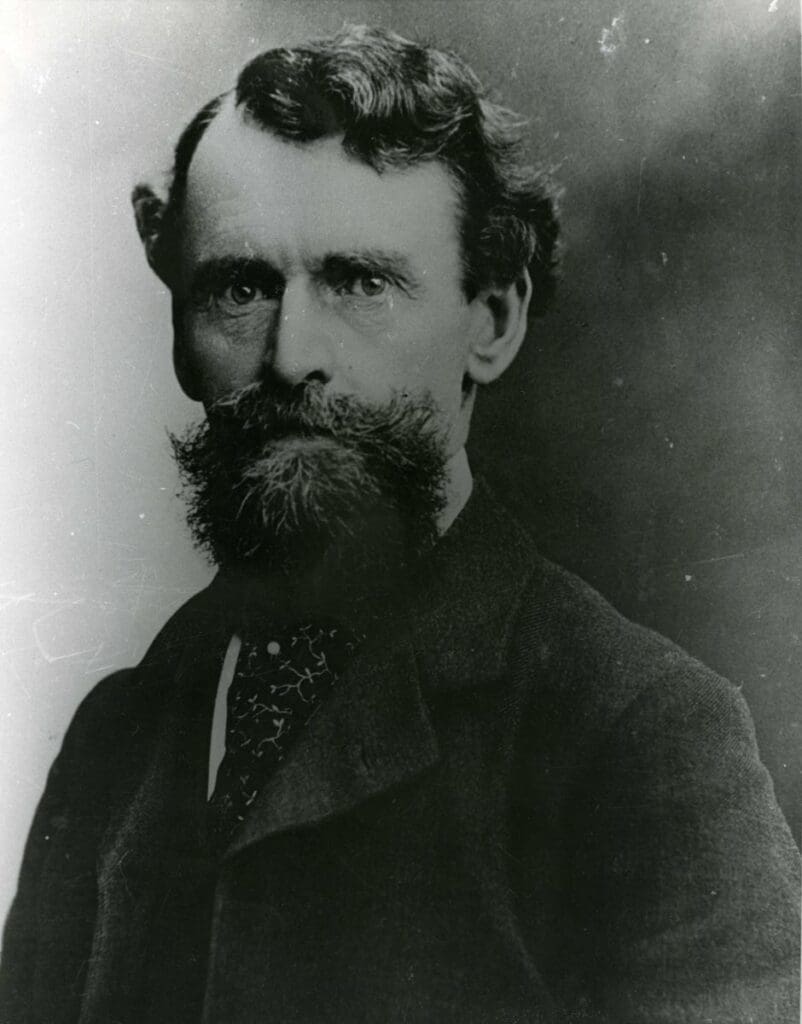
William A. Clark, famous mining magnate. Circa 1900. Source: World Museum of Mining
1872
The Butte mining camp was in decline, most surface gold was gone, and what remained was trapped in quartz with no mill to process it. William A. Clark came to Butte, bought up quartz claims at very low prices, and eventually acquired a quartz mill. With the mill, Clark could process the miners’ ore, an early move that positioned him to profit from what came next.
1874
Gold played out completely; it went quickly between 1864 and 1874. By the time it was gone, Butte’s population had significantly decreased; estimates suggest only 61-241 people remained in Butte.
1875 January
William Farlin staked the Travona mine after learning the black rock around Butte contained silver, which helped revive the dwindling mining camp. Shortly after, more silver and tons of copper were discovered around Butte. However, at this point, the miners were not interested in copper.
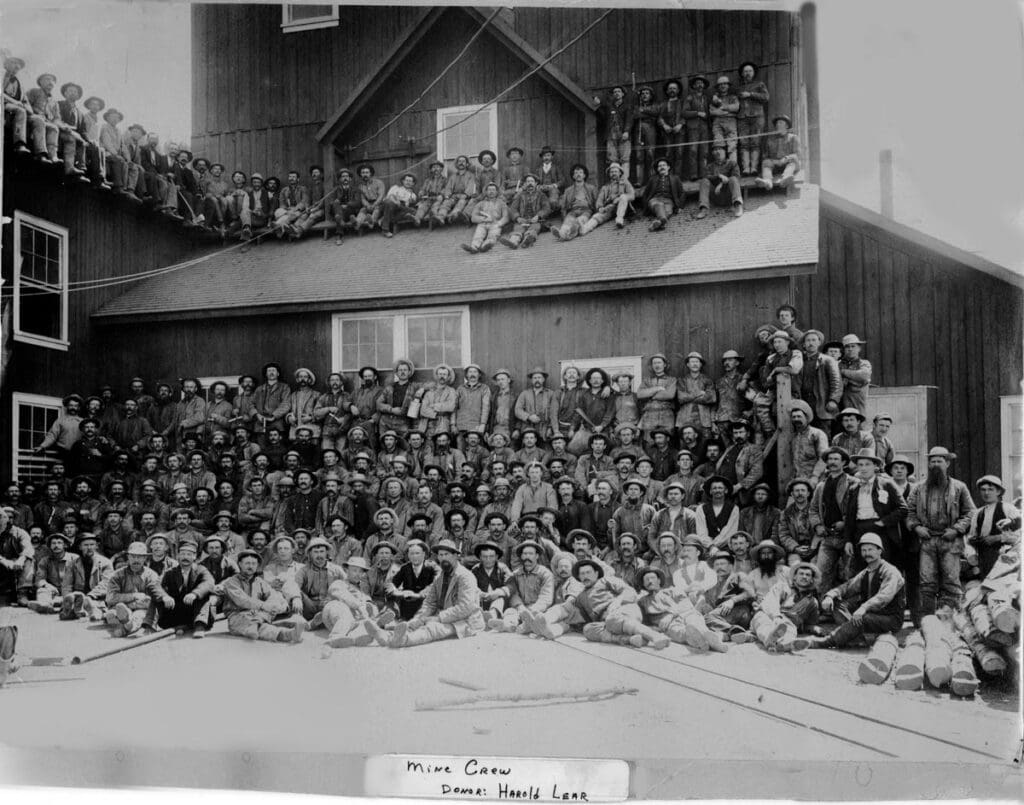
Crew of miners at the Alice Mine. Circa 1882. Source: World Museum of Mining
1876
Irish-born Marcus Daly came to Butte to look at the Alice Mine on behalf of the Walker Brothers of Salt Lake City. They purchased the Alice Mine, Daly became the superintendent, and Daly was awarded a share of the mine.
1876 March 7
Alexander Bell received the first patent for his new invention, the telephone, and copper transmission wires became essential to expanding communication networks.
1878 June 13
The Butte Workingmen’s Union formed during a strike by miners over having wages cut from $3.50 a day to $3.00 a day at the Alice and Lexington silver mines.
1879 November 4
Thomas Edison invented the first iteration of a commercially viable electric light bulb.
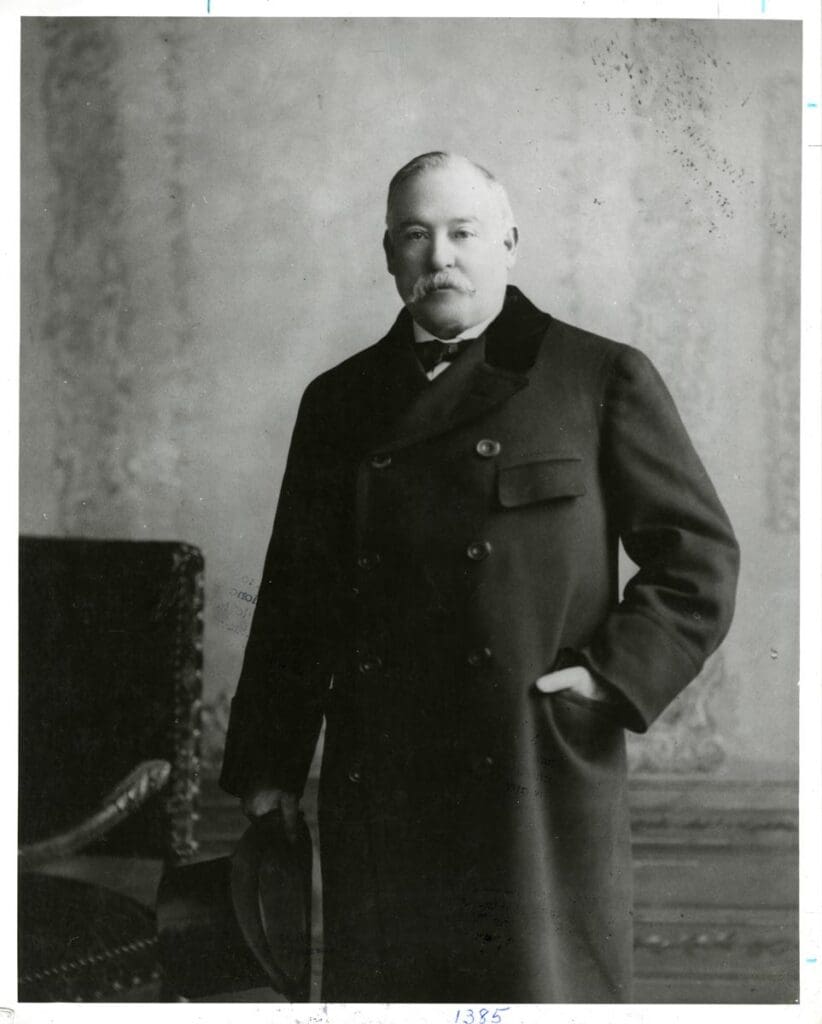
Marcus Daly, one of the famous Copper Kings. Circa 1895. Source: World Museum of Mining
1880
Marcus Daly bought the Anaconda Mine with the help of investors and founded The Anaconda Gold and Silver Mining Company (often called The Company). They hoped to find silver, but instead found a large copper deposit.
1880
Butte got electrified, and between 1880 and 1881, mines around Walkerville started to install electric lights. About 3,363 people lived in Butte at this time, according to the 1880 Census.
1882 February
The first Miner’s Union Hall collapsed.
1884
Butte welcomed its first electric power plant, located on East Mercury Street between Main Street and Wyoming Street. Over the next year, the electric power plant began providing service to most customers in the central business district.
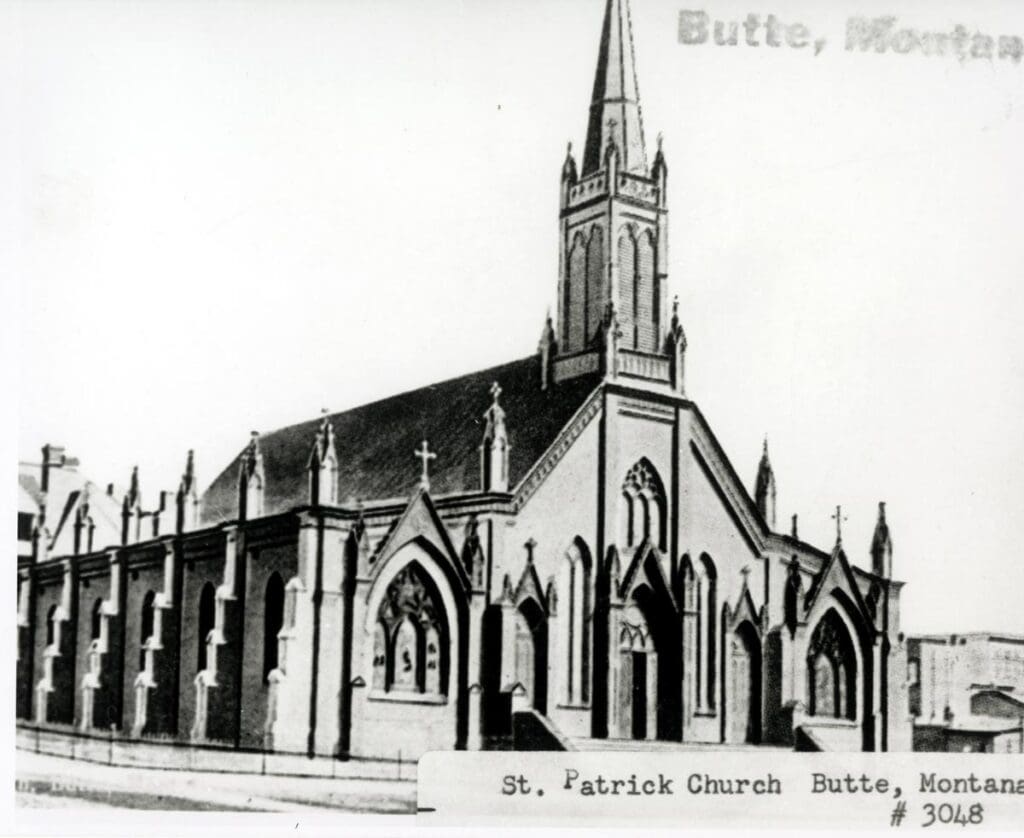
St. Patrick's Church in uptown Butte. Circa 1920. Source: World Museum of Mining
1884
St. Patrick’s Cathedral was formally dedicated, and by the following year, it had 2,500 parishioners—representing nearly two-thirds of Butte’s registered church members at the time. As the congregation grew, St. Patrick’s became a cornerstone of Butte’s early Irish population.
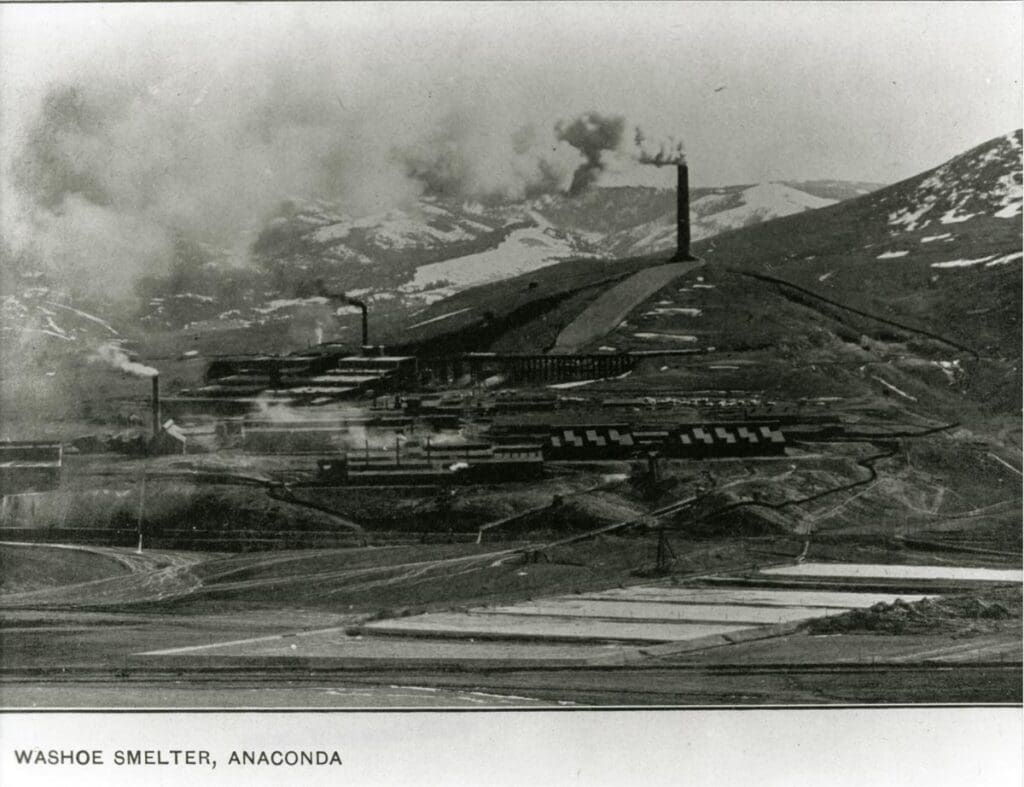
The Washoe Smelter in Anaconda. Circa 1900. Source. World Museum of Mining
1884
Daly opened the Washoe smelter in Anaconda. This smelter had five times more capacity than any of the smelters in Butte.
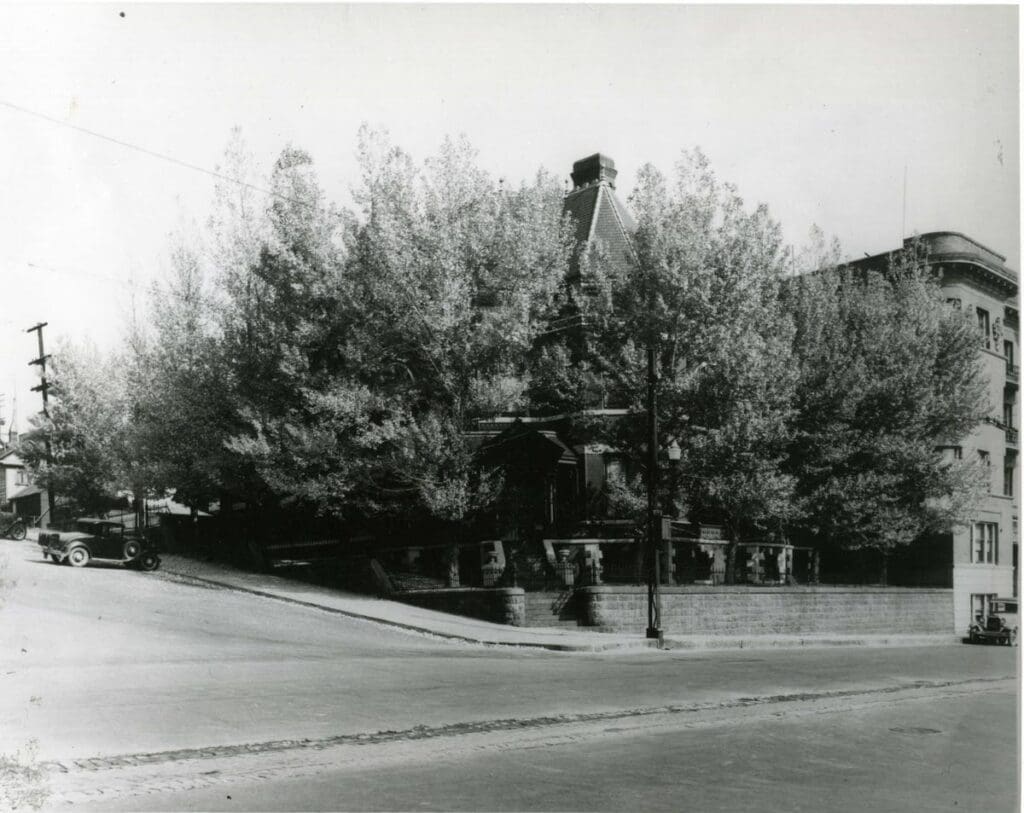
The W.A. Clark Mansion. Circa 1920. Source: World Museum of Mining
1884
William A. Clark began construction on his 34-room, Victorian-style mansion, presently referred to as the Copper King Mansion. Construction wrapped up in 1888.
1885 March
The Butte Miners’ Union was formed and limited its membership to miners only. The second Miner’s Union Hall was completed.
1886 January 2
The Knights of Labor joined with the Butte Miners’ Union, the Tailors, and Typographical unions, and formed the Silver Bow Trades and Labor Assembly.
1886 May 5-9
A strike by Utah and Northern railroad brakemen shut down the Anaconda mine and smelter.
1887 June 13
The Bluebird incident brought a closed shop to the Butte mines that lasted for 27 years.
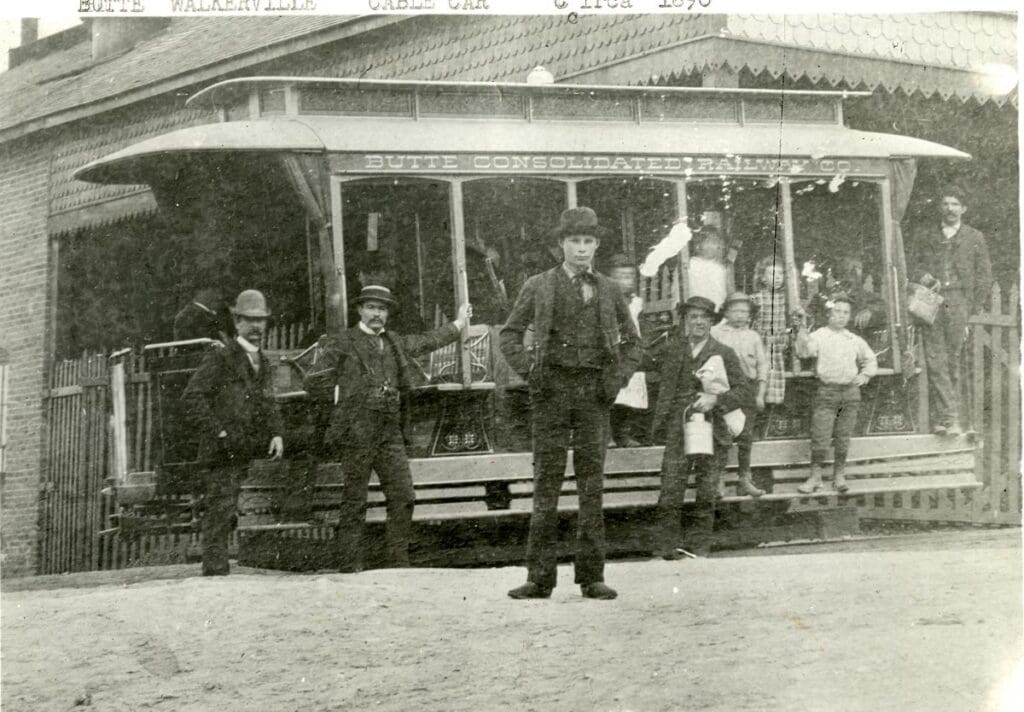
Butte and Walkerville cable cars. Circa 1890. Source: World Museum of Mining
1888
Steam-powered locomotives traveled around Butte, and a cable car climbed Main Street up the hill to Walkerville. Around the same time, John Gordon and Frederick Ritchie opened Columbia Gardens, but with limited trolley service, the gardens struggled and ultimately failed.
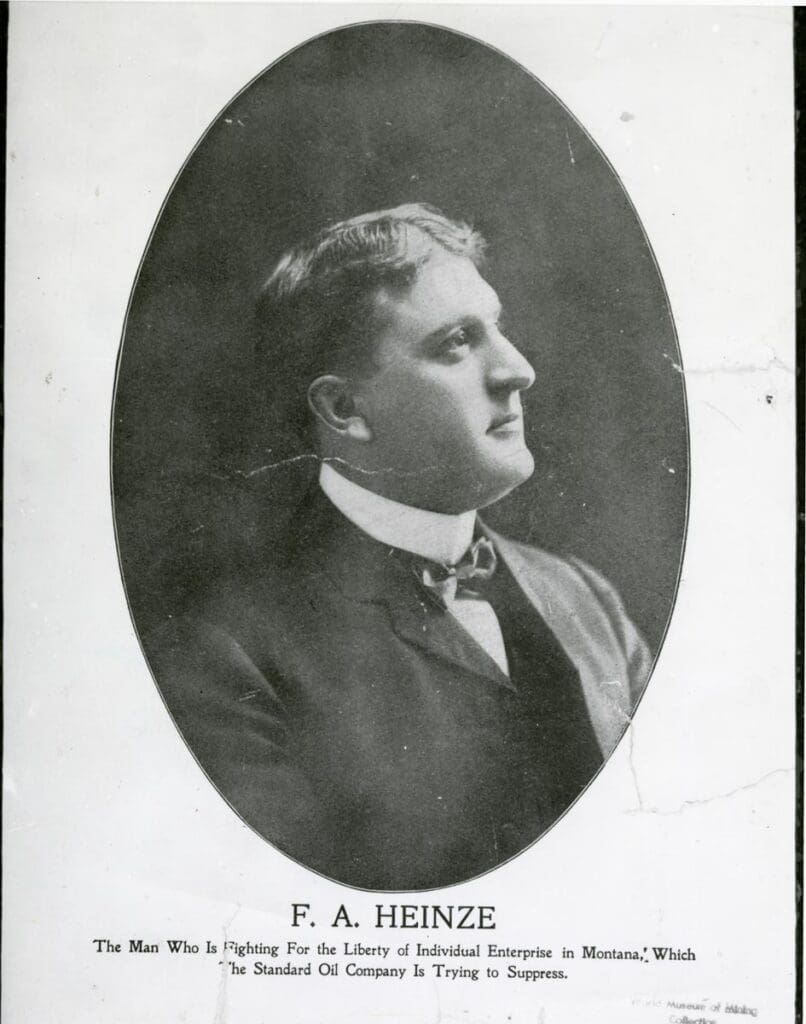
F. Augustus Heinze. Circa 1900. Source: World Museum of Mining
1889
F. Augustus Heinze arrived in Butte at the age of 19 as a mining engineer. He quickly founded his own mining company and began climbing the ranks as a copper king.
1890
Dumas Brothel opened as Butte surged back to life. According to the 1890 Census, 23,300 people lived in Butte at the time.
1890 May 6
A strike against a wage reduction to $2.50 a day for surface workers prompted strikers to form the Butte Laborers Union. The new union changed its name to the Butte Workingmen’s Union in honor of Butte’s first union.
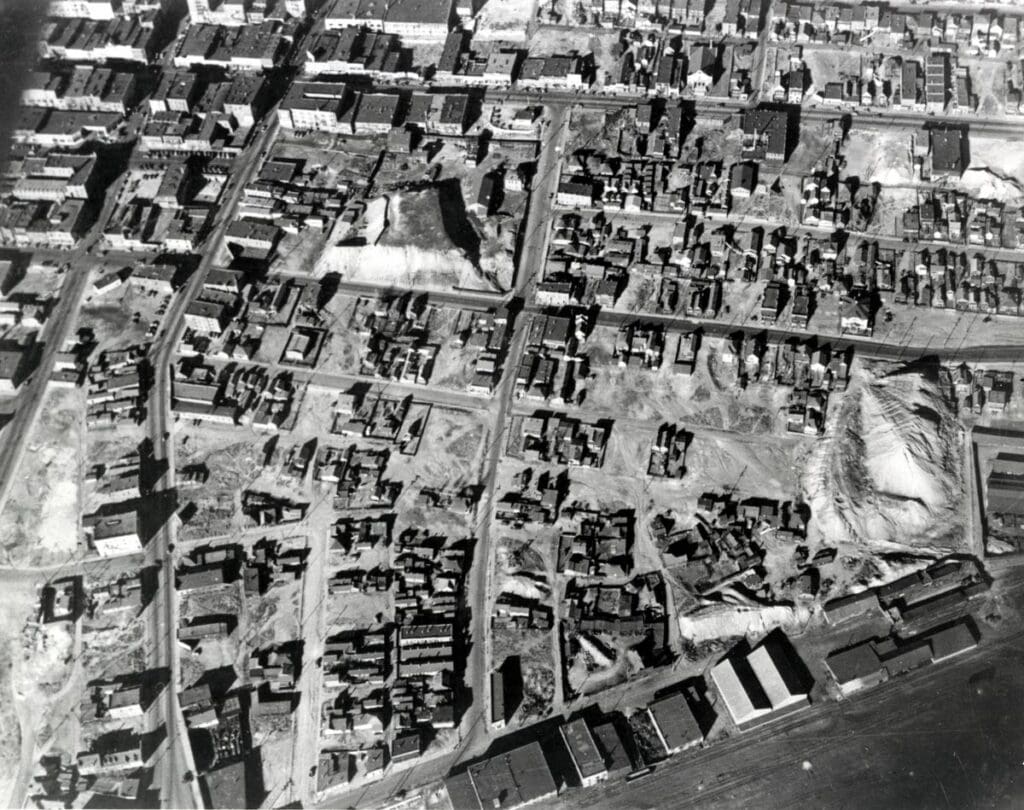
Aerial view of the Cabbage Patch. Circa 1930. Source: World Museum of Mining
1891
The Anaconda Gold and Silver Mining Company changed its name to the Anaconda Mining Company. During this time, the Cabbage Patch, which housed Butte’s poorest residents, began to take shape.
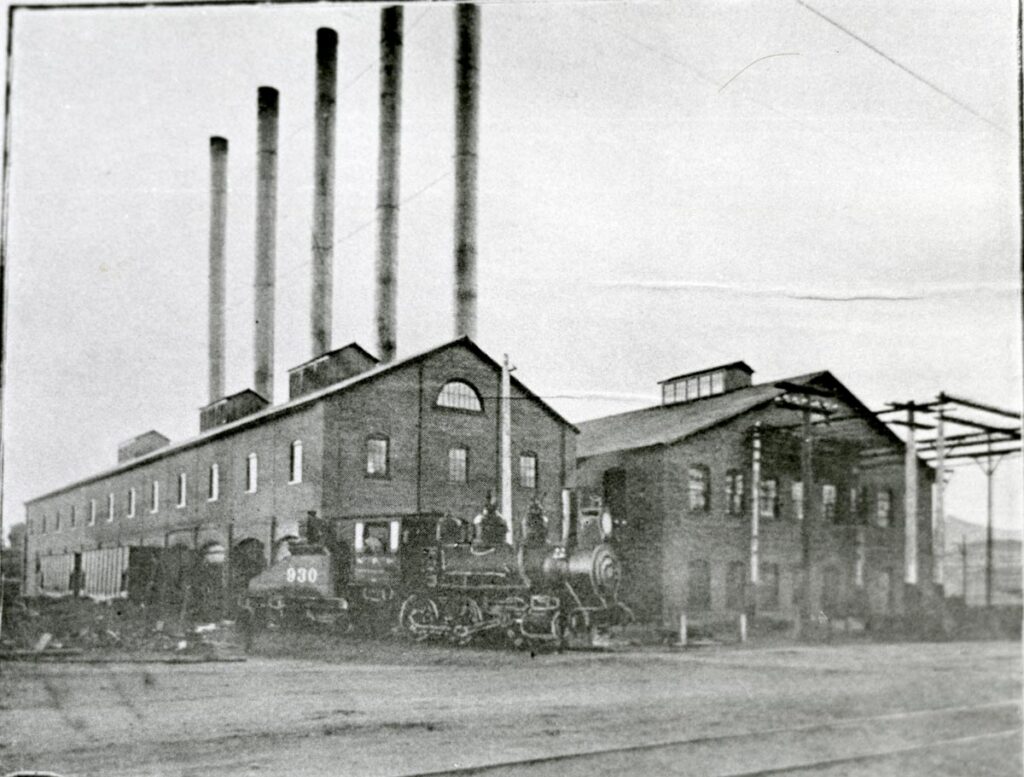
BA&P Railroad Locomotive. Circa 1910. Source: World Museum of Mining
1892
Marcus Daly built the Butte, Anaconda, and Pacific Railway (BA&P) to haul ore from his Butte mines to the smelter in Anaconda.
1893 May 15
The Western Federation of Miners founded the Butte Miners’ Union and designated it as Local Number 1.
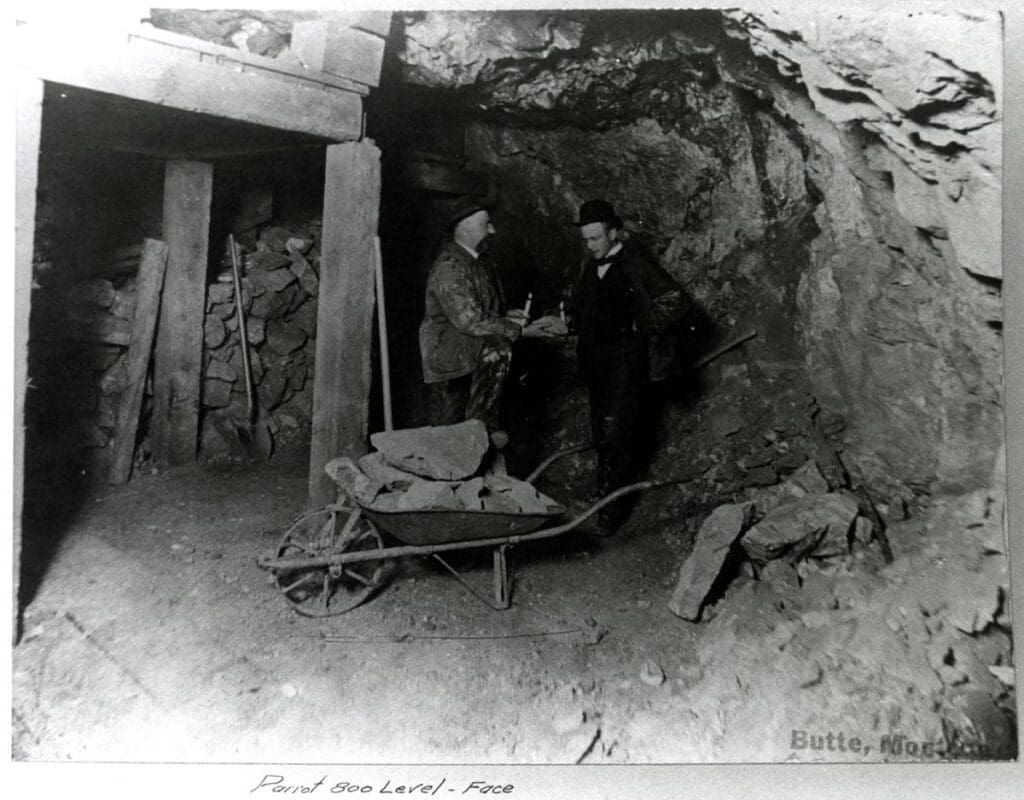
Underground in the Parrot Mine. Circa 1898. Source: World Museum of Mining
1894 June 7-23
A railroad strike of BA&P and Pullman workers closed the Anaconda, Syndicate, and Parrot mines.
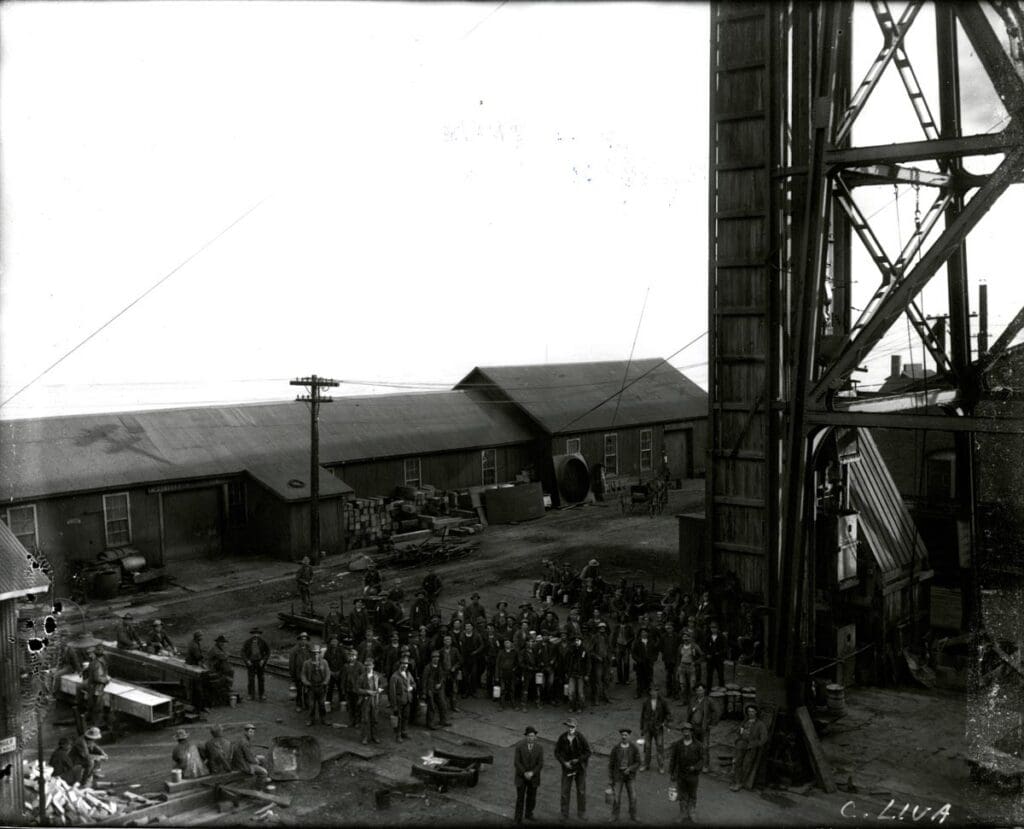
Miners waiting to go on shift at Anaconda Mine. Circa 1910. Source: World Museum of Mining
1895
The Anaconda Mining Company changed its name to Anaconda Copper Mining Company.
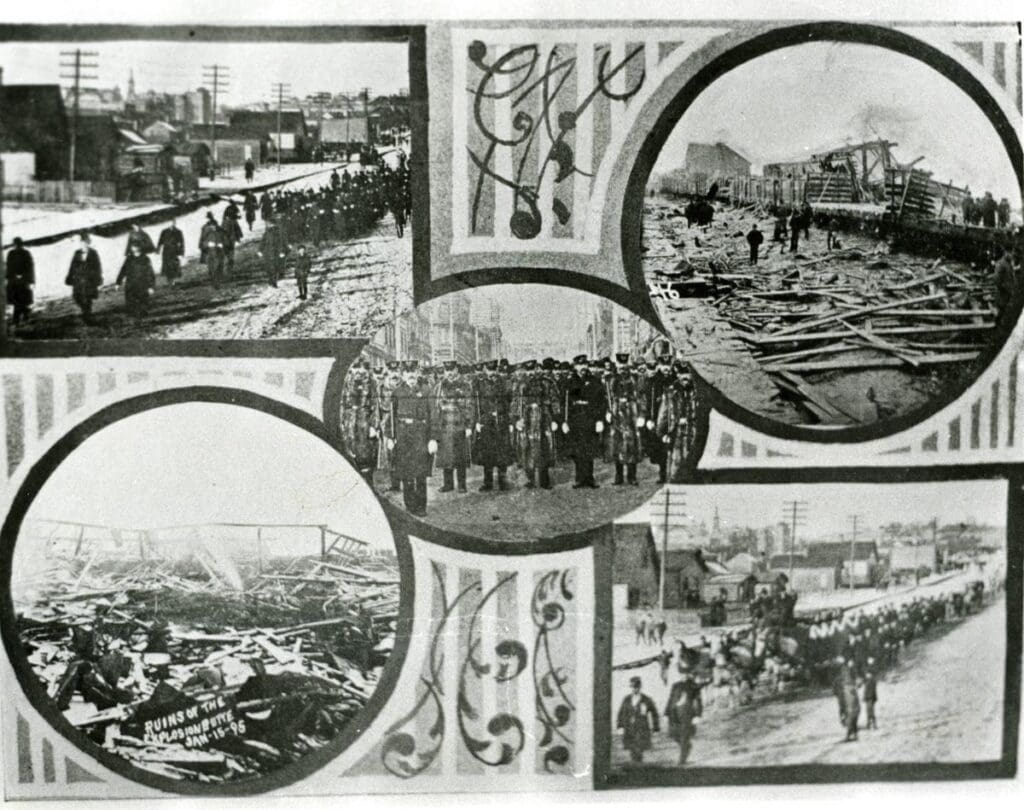
Damage and funeral scenes from the explosion. Circa 1895. Source: World Museum of Mining
1895 January 15
A fire broke out at the Kenyon-Connell warehouse and the Butte Hardware Company. After firefighters arrived, an explosion killed all but two members of Butte’s Fire Department.
1896 January 6
The Butte Teachers’ Union initiated a school strike.
1897 January 13
The Silver Bow Labor Trades and Labor Assembly announced a boycott against Chinese and Japanese businesses, blaming them for bad economic conditions.
1897 April 15
Several Chinese businessmen sued to recover $500,000.00 in damages caused by the union boycott. They received an injunction and won the suit in 1898, collecting court costs of $1,705.05 but no damages.
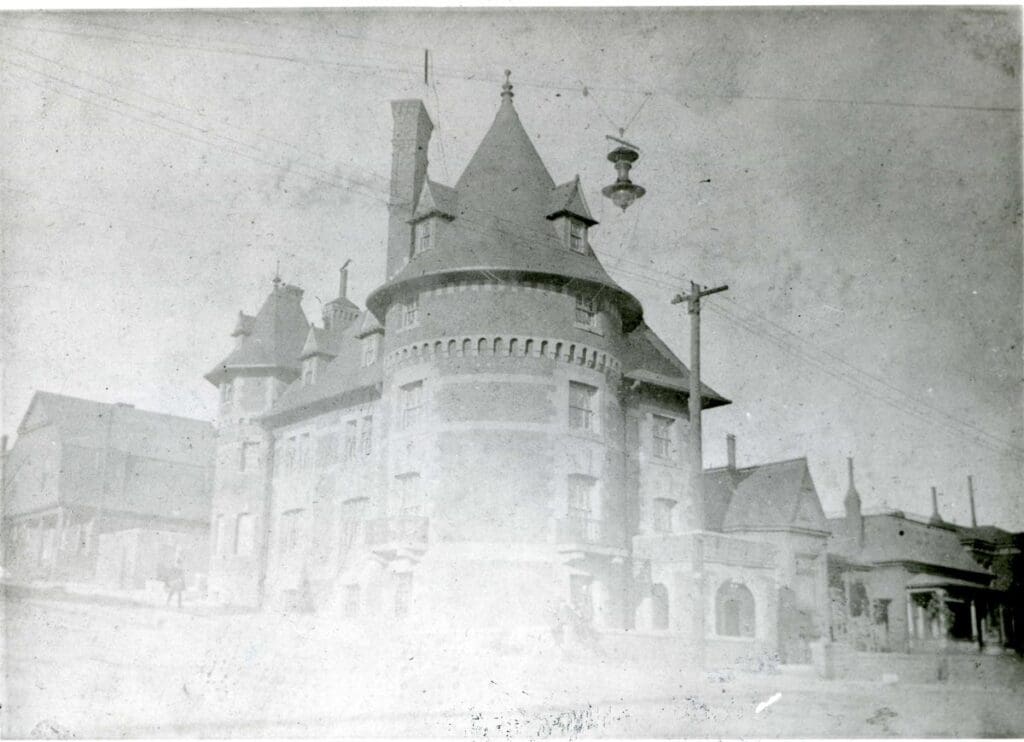
Charles Clark Mansion. Circa 1950. Source: World Museum of Mining
1898
William A. Clark began construction on the Clark Chateau. The home was built for his oldest son, Charles. The design was inspired by French chateaus and was completed in 1899.
1899
Daly sold his mining operations, Anaconda Copper Mining Company, for $39 million. Standard Oil Trust investors bought it and created an umbrella corporation called the Amalgamated Copper Company, which included most of Butte’s mining operations, most of the area’s newspapers, and other businesses.
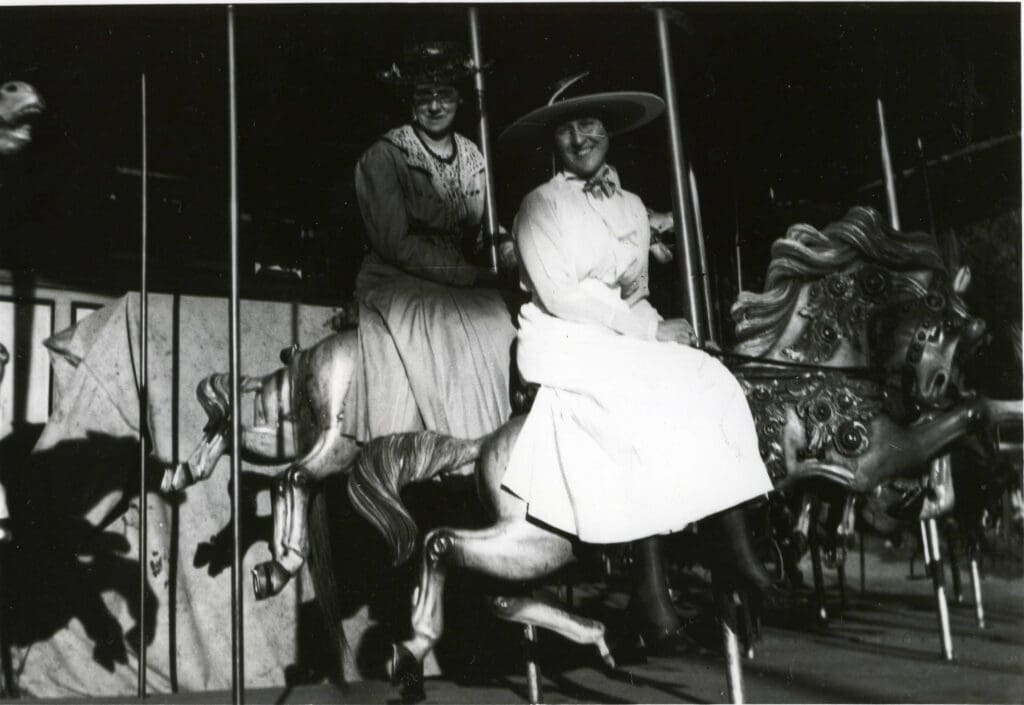
Columbia Gardens – Ladies on the Merry-Go-Round. Circa 1900. Source: World Museum of Mining
1899 March
William A. Clark purchased the Columbia Gardens, which served to bolster his public image during his attempt at politics. However, at the same time, Clark bribed state legislators in an effort to secure one of Montana’s U.S. Senate seats. The bribery initially won him the election; however, the Senate refused to seat him. The scandal, in part, led to the eventual passage of the 17th Amendment to the Constitution.
1900s
1900
Montana Tech opened its doors as the Montana State School of Mines. At the time, only the Main Hall existed, and 21 students enrolled in one of two majors: mining engineering or electrical engineering.
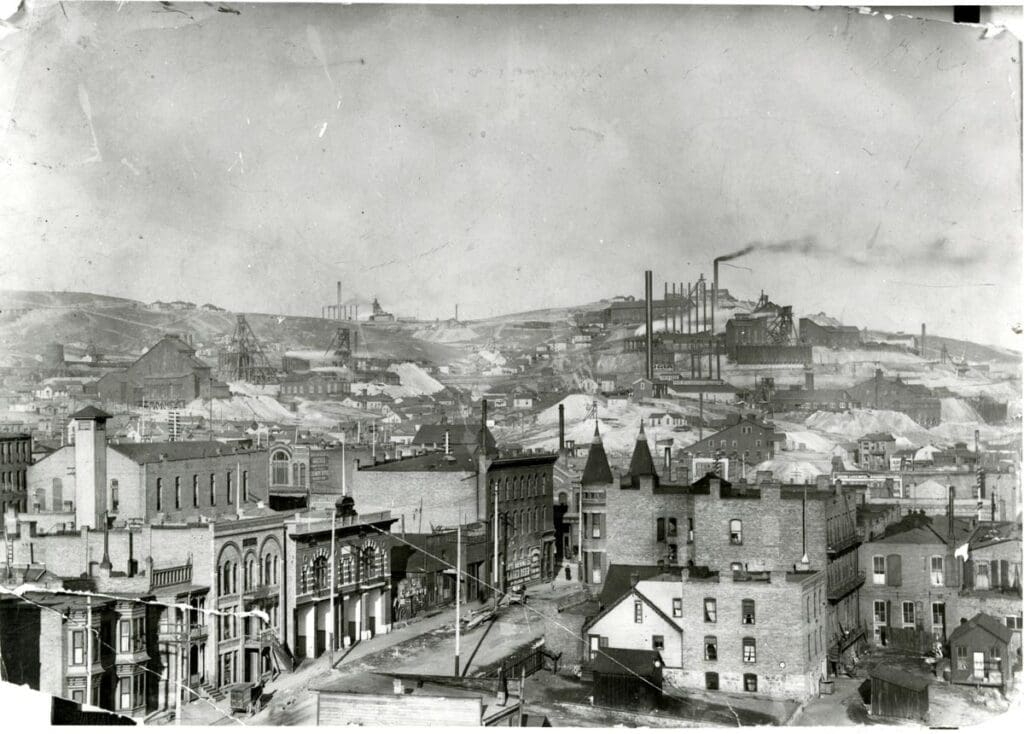
Butte Hill. Circa 1900. Source: World Museum of Mining
1900
Immigrants from all over the world moved to Butte during the late 1800s, most notably, a strong Irish population, and by this point, a quarter of Butte’s population was Irish.
1900 November 12
Marcus Daly died at the age of 58 from diabetes complications and a heart condition.
1903 October 22
In a court ruling tied to F. Augustus Heinze’s legal fight with the Amalgamated Copper Company (The Company), a judge ruled in Heinze’s favor and effectively treated The Company’s operations as illegal. In response, The Company shut down its operations, leaving roughly 15,000-20,000 people out of work, and demanded that the state call a special legislative session to pass a change in the law in The Company’s favor. The event became known as The Great Shutdown and lasted until December 1903.
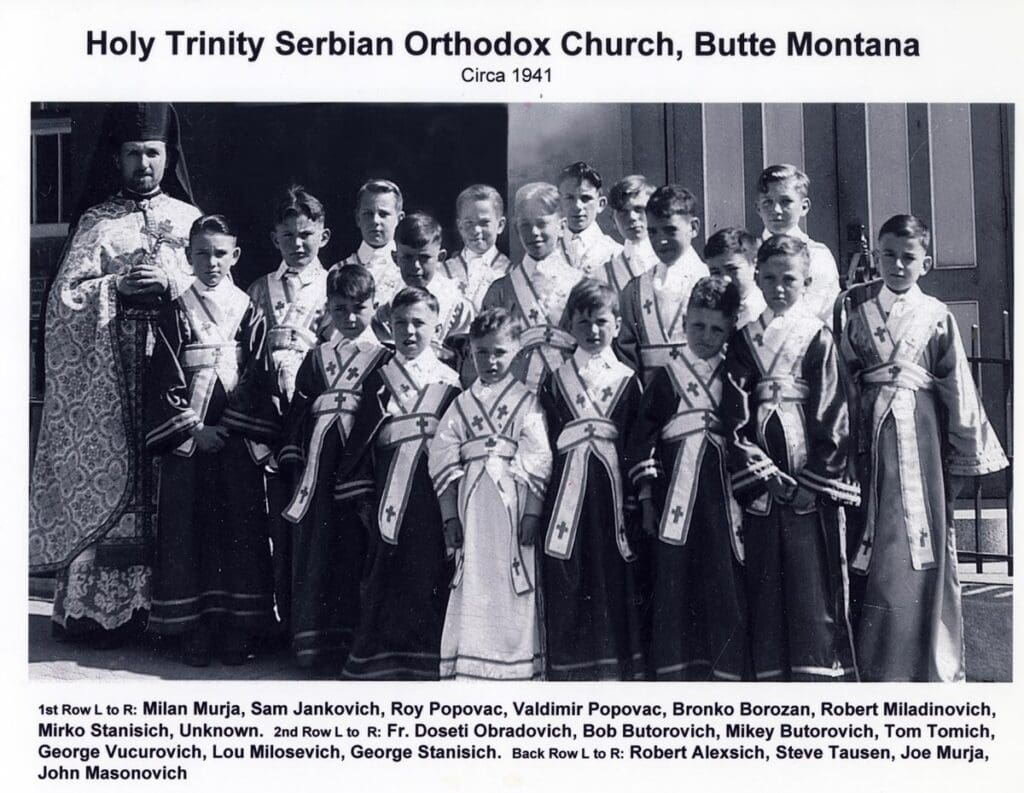
Holy Trinity Serbian Orthodox Church. Circa 1941. Source: World Museum of Mining
1905
Holy Trinity Church was constructed, and at the time, it was just the second Serbian Orthodox Church constructed in North America.
1905 June 27
The Industrial Workers of the World (I.W.W.) was formed at a meeting of labor activists in Chicago. One founder, William D., Big Bill, Haywood Jr., called it “Socialism with its working clothes on.”
1907
F. Augustus Heinze took his fortune to New York, opened a bank, and joined his brothers in a risky bid to corner the copper market. Silent runs began on Heinze’s bank and Knickerbocker Trust. At the same time, Heinze loaned his brothers money to aid their attempt to corner the copper market on the stock exchange, which ultimately failed in October of 1907. Rivals blasted the family’s financial problems to the press, Heinze was pushed out, and depositors rushed to both institutions to withdraw their funds. The fallout was initially intended to affect Heinze and the trusts, but it quickly got out of hand, and the Panic of 1907 became an economic nightmare for the entire nation.
1907-1908 Sept 12, 1907 – Feb 29, 1908
Citing a slump in the copper market, The Company reduced its workforce by half on September 12th, and then shut down almost all of the mines on the Hill on December 7th. Full production did not resume until the next year.
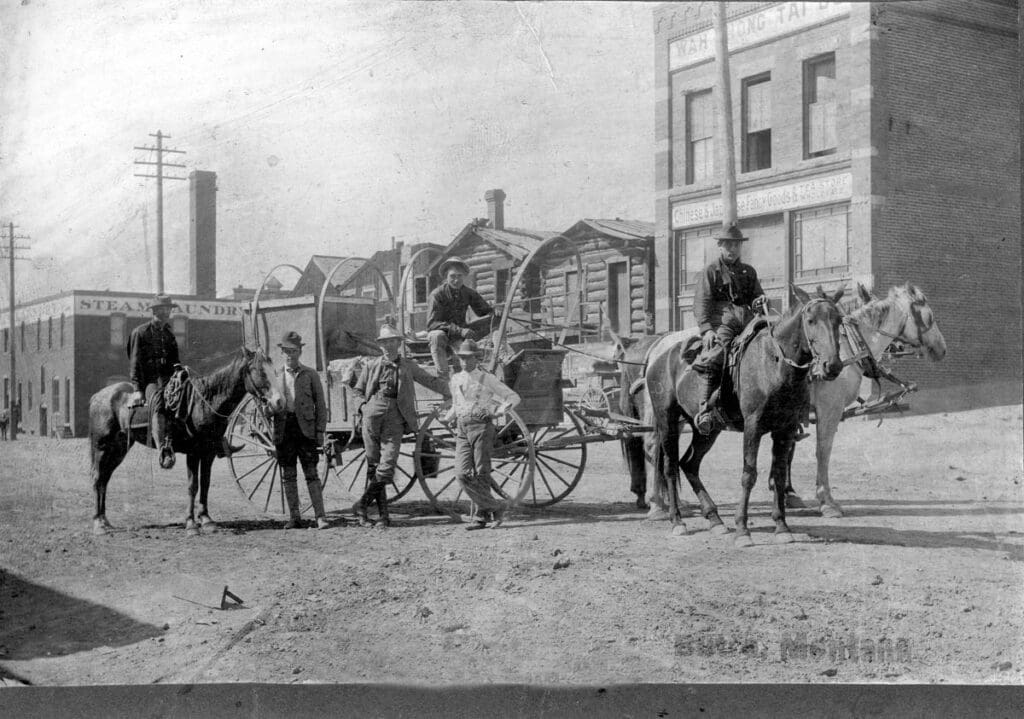
West Mercury Street. Circa 1910. Source: World Museum of Mining.
1911
The Pekin Noodle Parlor opened in Chinatown, creating what eventually became the world’s oldest, continually operated, family-owned Chinese restaurant in the United States.he Company reduced its workforce by half on September 12th, and then shut down almost all of the mines on the Hill on December 7th. Full production did not resume until the next year.
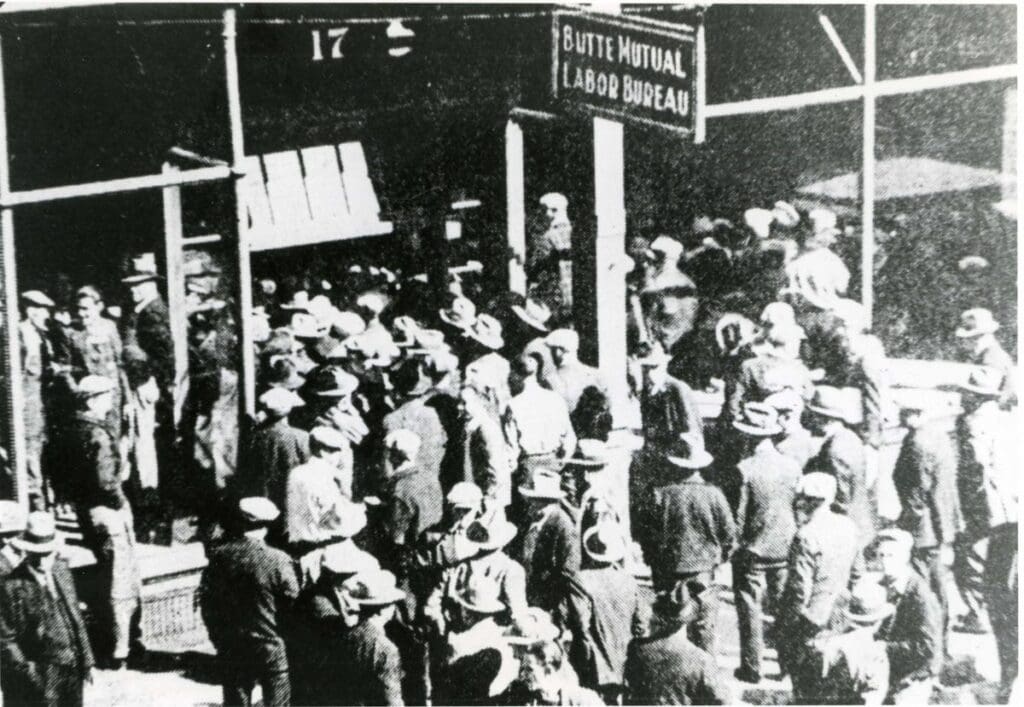
Miner's crowding the Labor Bureau to secure rustling cards. Circa 1936. Source: World Museum of Mining
1912 December 1
The Rustling Card system was put into place by The Company. Agitators identified by spies were refused cards and, therefore, were not to be hired for work.
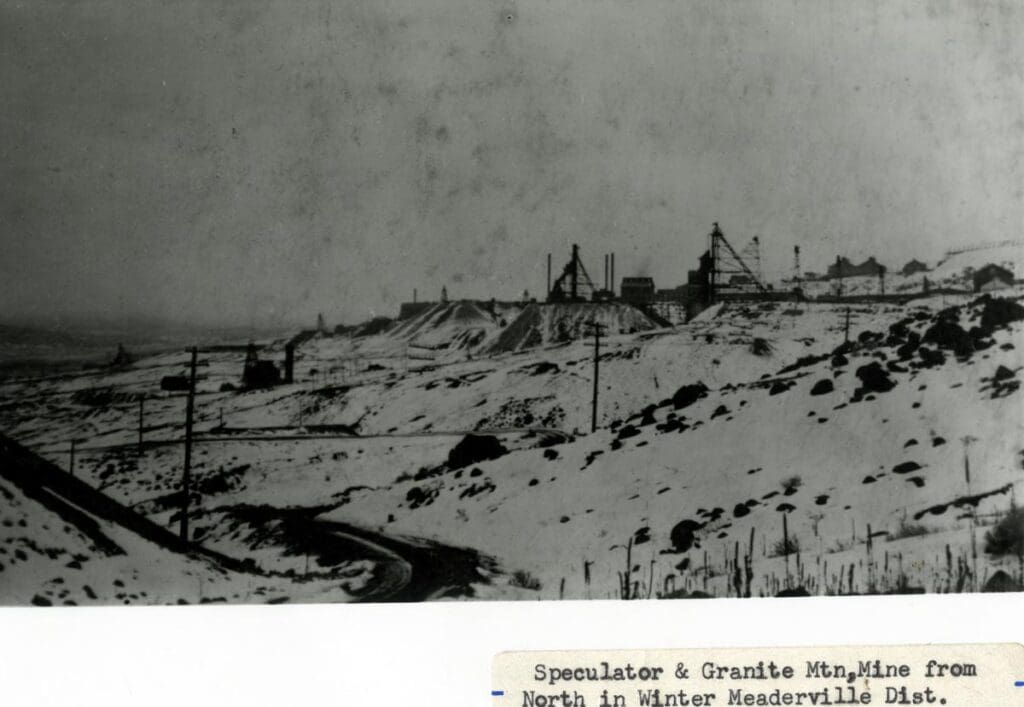
Speculator Mine. Circa 1910. Source: World Museum of Mining
1914 June 12
An incident began at the Speculator mine when Muckie McDonald encouraged fellow workers to refuse to show their union cards. The evening shift workers at the Speculator and Black Rock mines stayed out in support of protesting workers. The walkout involved 1,200 workers and marked the start of a week of big trouble.
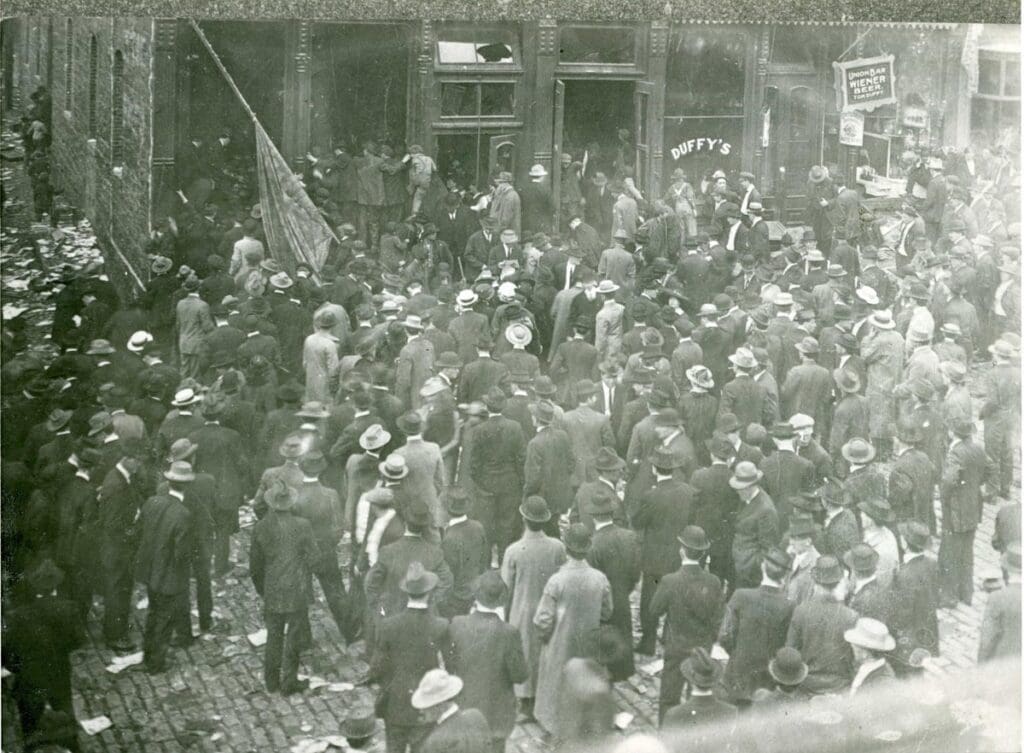
Crowd looking at the Miner's Union Building after it was ransacked. Circa 1914. Source: World Museum of Mining
1914 June 14
A riot broke out at the Miners’ Union Day parade and spread to the Miners’ Union Hall. During the riot, the Hall was looted, and the safe was stolen and dynamited. Acting mayor Frank Curran was pushed out of a second-story window.
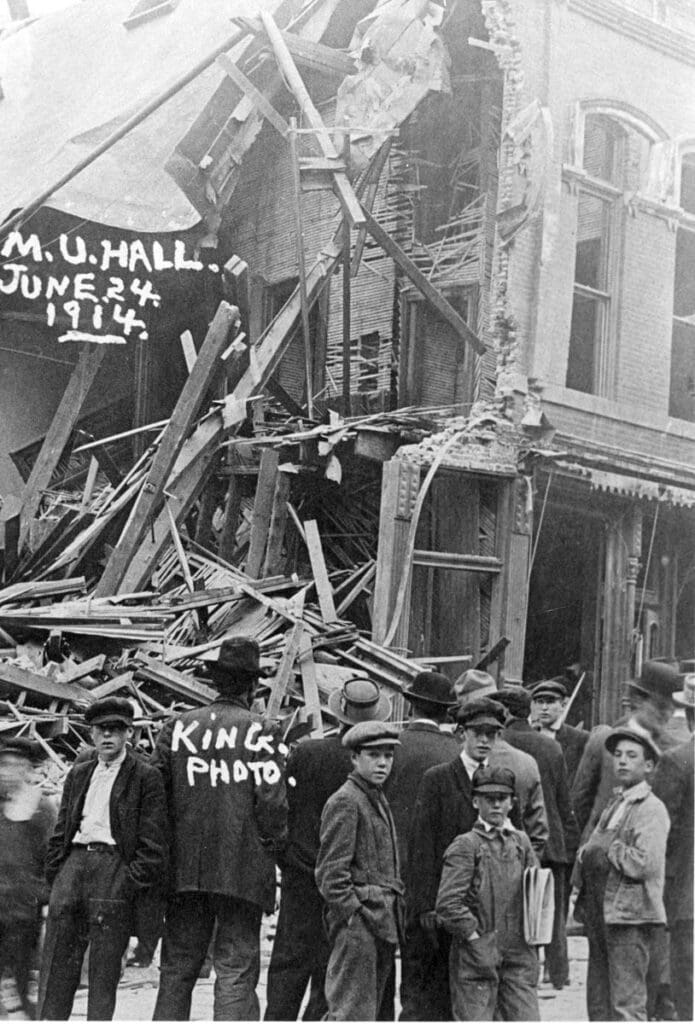
Miner's Union Hall after the explosion. Circa 1914. Source: World Museum of Mining
1914 June 23
The Miner’s Union Hall was destroyed with dynamite.
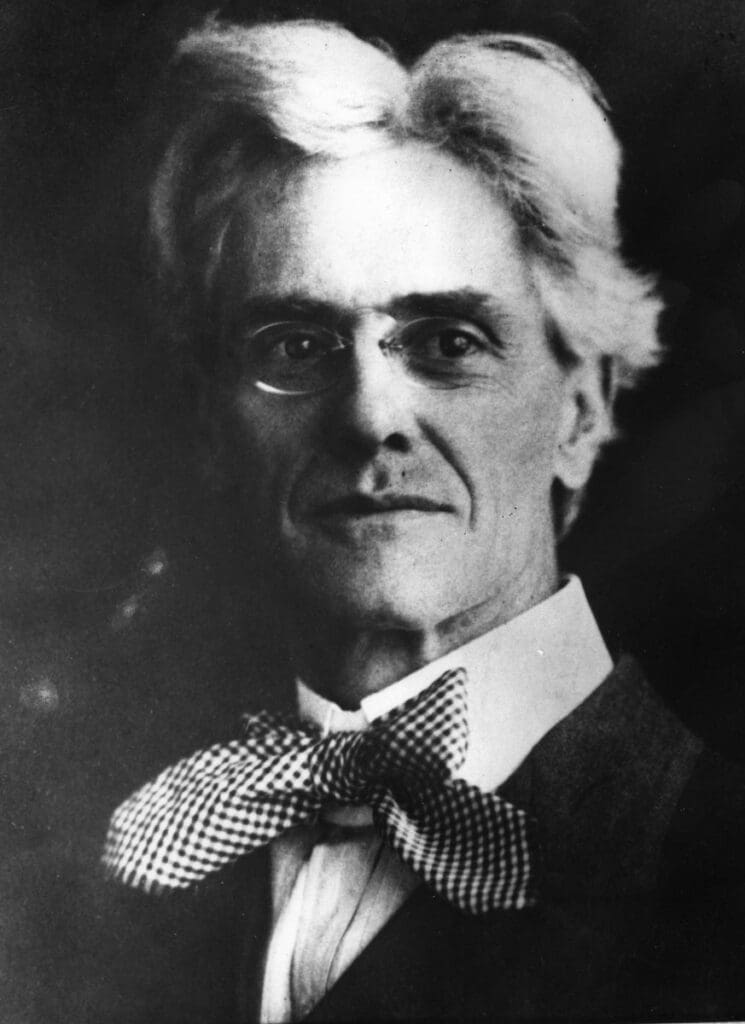
Mayor Lewis Duncan, 1914. Source: World Museum of Mining
1914 July 3
Mayor Lewis Duncan was attacked and stabbed in his office. Duncan shot his attacker in self-defense.
1914 August 20
The rustling office at the Parrot mine was dynamited.
1914 September 9
The Company declared an open shop and renounced the Western Federation of Miners.
1914 November 4
F. Augustus Heinze died at 44 years old from a stomach hemorrhage caused by liver cirrhosis.
1915
Amalgamated Copper Company dissolved, and all of its properties became departments at the Anaconda Copper Mining Company.
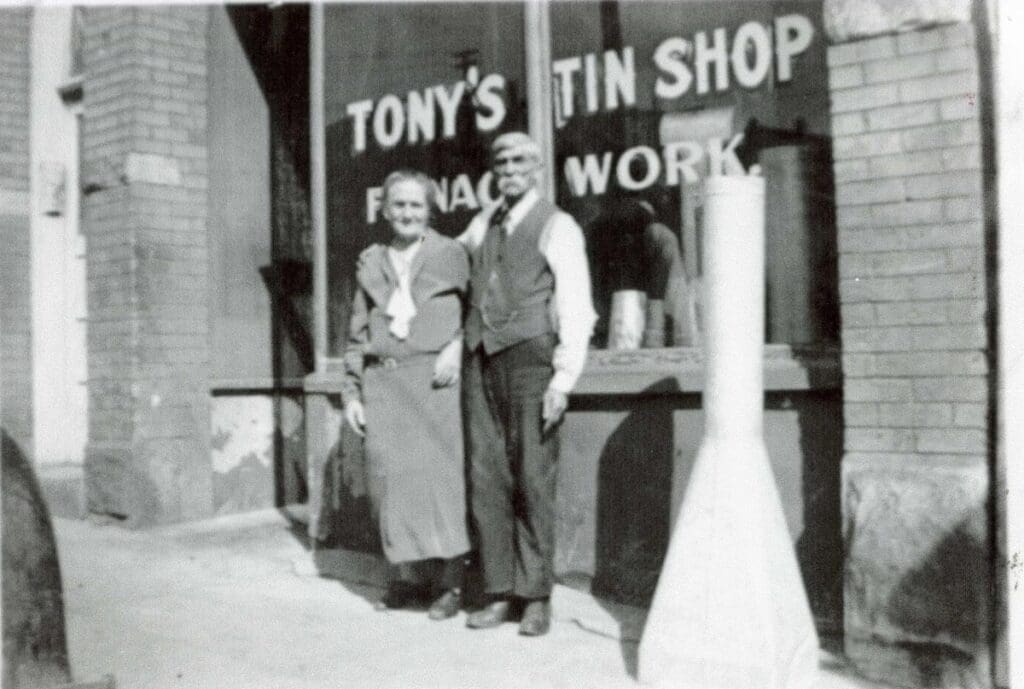
Tony and Myra Canonica in front of the shop. Circa 1920. Source: World Museum of Mining
1915
Swiss-born, Antone, ‘Tony,’ Canonica built the first floor of Tony’s Tin Shop, and moved his business and his family into the building.
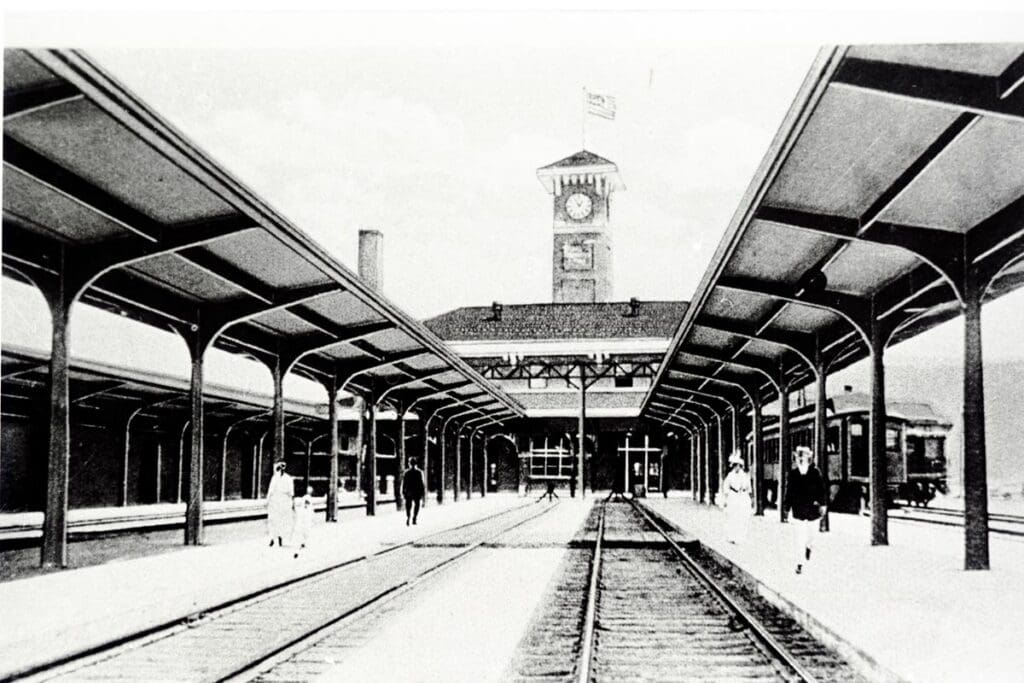
Chicago, Milwaukee and St. Paul's depot in Butte. Circa 1929. Source: World Museum of Mining
1917
After eight years of using the Butte, Anaconda, and Pacific Railroad (BA&P) stop in Butte for passenger service, the Milwaukee Railroad opened a large station of its own for passenger travel on South Montana Street. This was also the year Butte’s population peaked at approximately 100,000.

Rescue Team at Granite Mountain Mine Fire. Circa 1917. Source: World Museum of Mining
1917 June 8
The Granite Mountain Fire killed 168 men in the worst disaster in metal mining history.
1917 June 11
Following the Granite Mountain disaster, a new union was formed, and a strike was called. Smelter workers returned to work, and mining resumed on September 16th. By December 28th, the Metal Mine Workers Union (MMWU) quit the strike.
1917 August 1
Frank Little was forcibly taken from his boarding house room, beaten, tied behind a car, and dragged through the streets of Uptown Butte, then lynched from a railroad trestle on the outskirts of town.
1918 September 13
A crackdown by local authorities and federal troops prevents a call for a general strike to protest the conviction of Industrial Workers of the World (I.W.W.) leaders. Omar Bradley led federal troops to shut down The Daily Bulletin, and I.W.W. members in Butte and Anaconda were arrested, including William F. Dunne, the editor of The Daily Bulletin.
1919 February 6-17
A strike was called over wage cuts of $1.00 a day in a copper slump after World War I. The Montana Governor broke the strike by calling in three companies of the 44th U.S. Infantry. The soldiers bayoneted nine strikers on February 10th.
1920
Tony Canonica completed the second story of his building, where his business, Tony’s Tin Shop, and family resided, and named the building Myra, after his wife.
1920 April 19
The I.W.W. called a strike that led to the Blood Wednesday massacre on the Anaconda Road on April 21. Federal troops arrived on April 22, and 500 miners returned to work on the 23.
1920 May 12
The Company banned I.W.W. member from the mines. Posted signs read “No member of I.W.W. will be employed at this property.”
1921-1922 April 1921 – January 1922
Citing depressed copper prices, The Company began to shut down its mines, and the process continued through the next year.
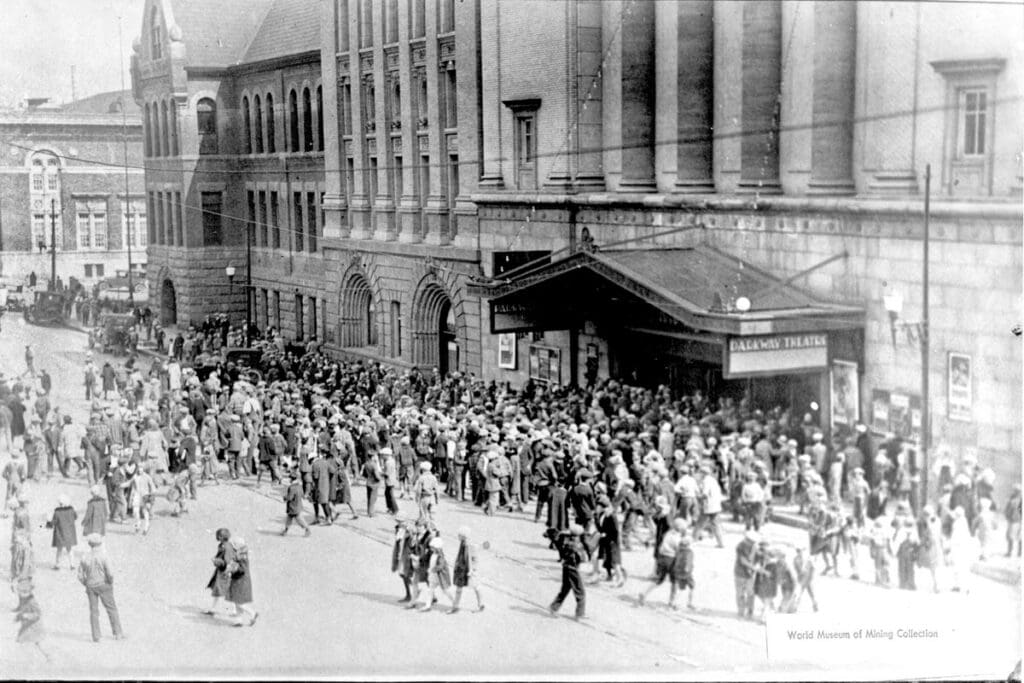
Original Parkway Theater. Circa 1920. Source: World Museum of Mining
1924 September 6
Mother Lode Theatre opened with its original name, the Temple Theatre.
1925 March 2
William A. Clark died at the age of 86 from pneumonia. The Anaconda Copper Mining Company purchased most of his holdings, and Clark left his children with a fortune worth over $200 million.
1926
Tony’s Tin Shop began to lease an upstairs portion of the building to Mrs. Mary Owen, who used the space as a brothel—known as the Myra Brothel—until 1929.
1927 June 20 – July 4
A newspaper strike stopped publication of the Butte Miner, the Anaconda Standard, and the Butte Daily Post.
1934 May 8 – September 20
The fourth longest strike resulted in a closed shop in Butte again for the first time since 1914.
1946 April 9-19
A short, bitter strike turned ugly when The Company had salaried employees cross picket lines to keep mines operating.
1950s
1951 August 27 – September 6
A national strike was curtailed when a Denver court granted an injunction sought by President Harry Truman to force miners and smelter men to return to work.
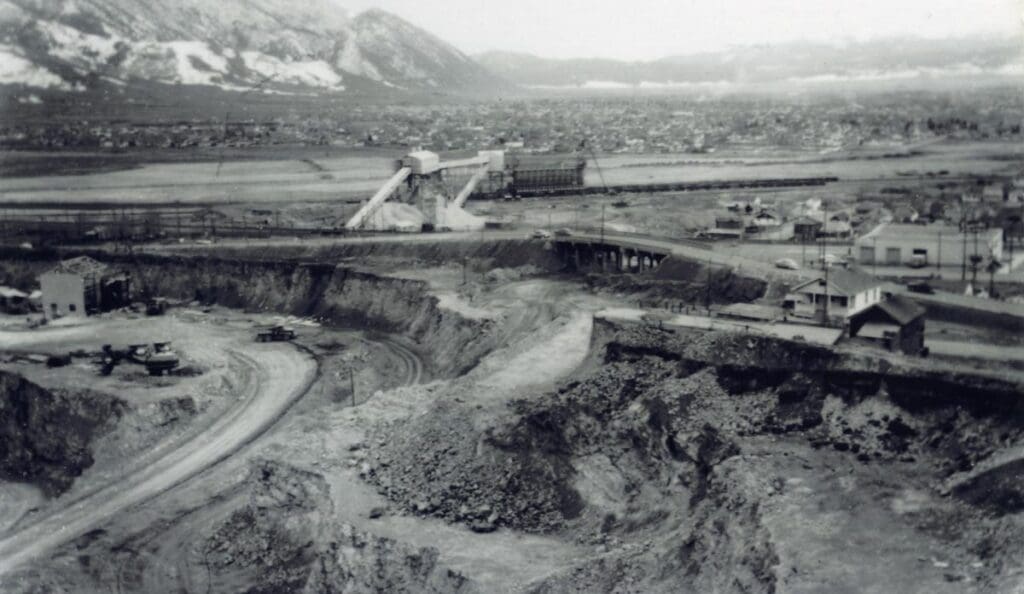
Berkeley Pit during early days of production. Circa 1950. Source: World Museum of Mining
1955
Open-pit mining started, and the Anaconda Copper Mining Company changed its name to The Anaconda Company, as its business activities had extended well beyond copper mining.
1959-1960 Aug 19, 1959 – Feb 15, 1960
The second-longest strike lasted 181 days.
1964
Anaconda Company donated the land for the World Museum of Mining
1964 Reno Sales inducted into Hall of Fame
Reno Sales, known as the “father of mining geology,” was inducted into the World Museum of Mining Hall of Fame. Until 2026, he was the only person in the Montana Mining Hall of Fame. The World Museum of Mining and the Montana Mining Association are collaborating to bring the Museum founders’ ideas to fruition.
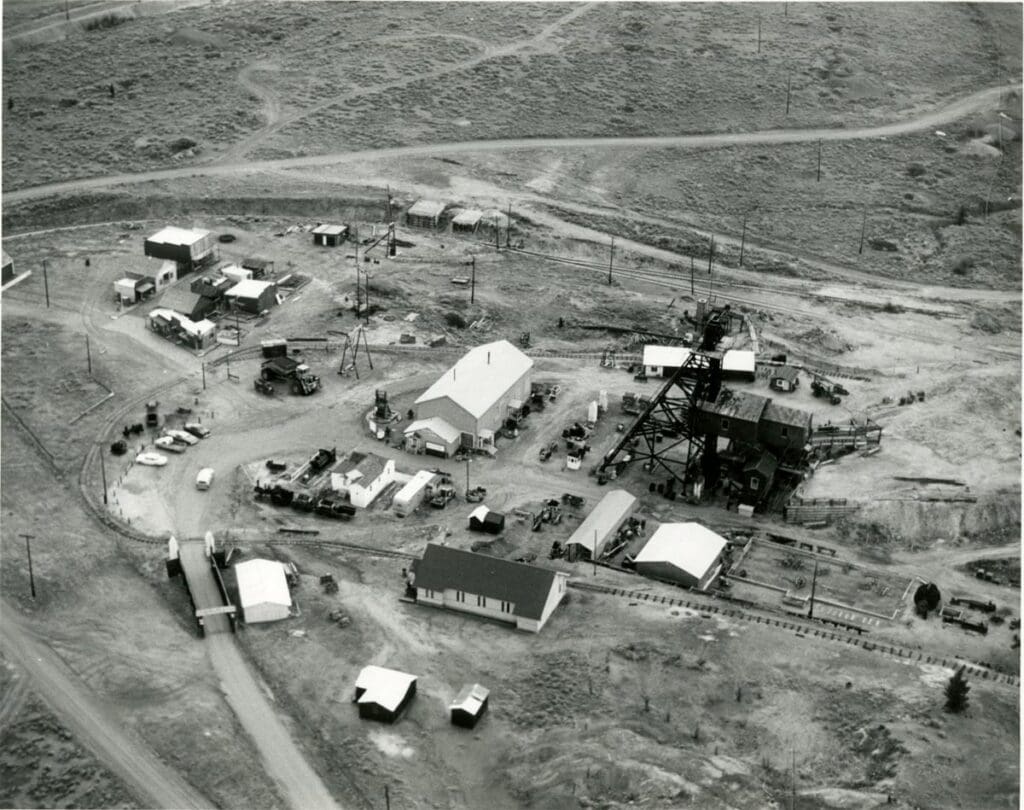
The Mining Museum in its early stages Circa 1970s. Source: World Museum of Mining
1965 July 18
The World Museum of Mining officially opened.
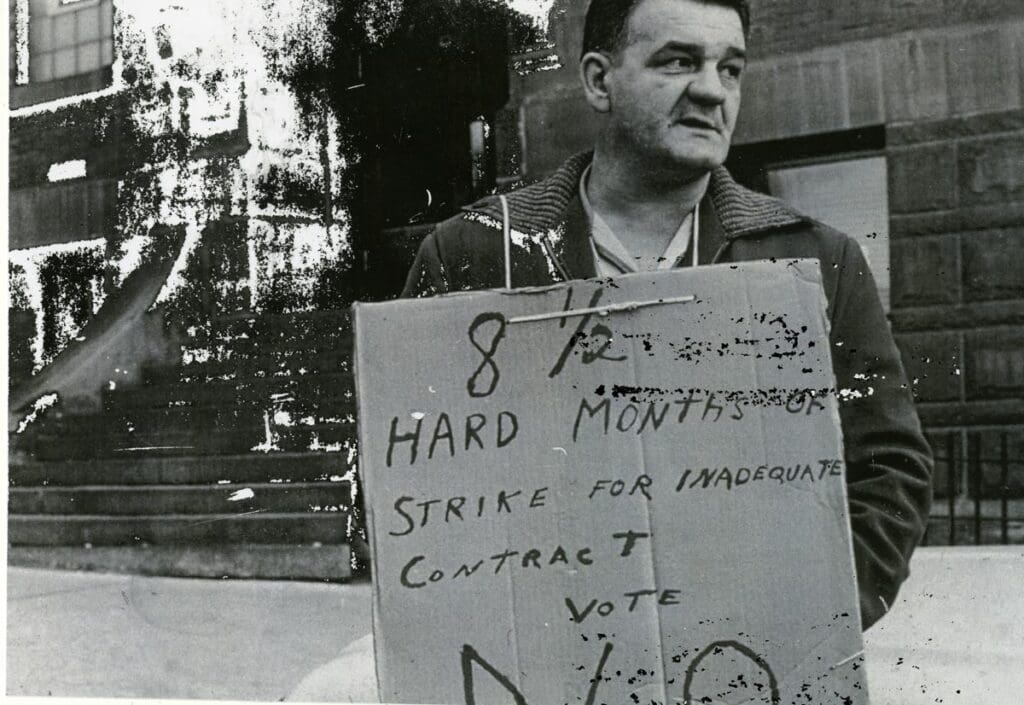
Miners on strike in front of the Miner's Union Hall. Circa 1967. Source: World Museum of Mining
1967-1968 July 15, 1967 – March 30, 1968
The longest strike in Butte’s history lasted eight and a half months.
1971 July 11
The Chilean government nationalized American-owned mines within the country, causing a financial crisis for The Anaconda Company.
1973 September 3
Columbia Gardens closed on Labor Day.
1973 November 12
The recently closed Columbia Gardens caught fire, and many people suspected it was caused by arson.
1974 November 5
The Anaconda Company announced the closure of the few remaining underground mines in Butte.
1977 January 12
Atlantic-Richfield Company (ARCO) purchased The Anaconda Company’s operations for approximately $700 million.
1977 July 1 – August 1
A month-long national strike of non-ferrous metal workers took place.
1979
The construction of the Our Lady of the Rockies monument began.
1980 June 17 – November 21
Third longest strike lasted four and a half months.
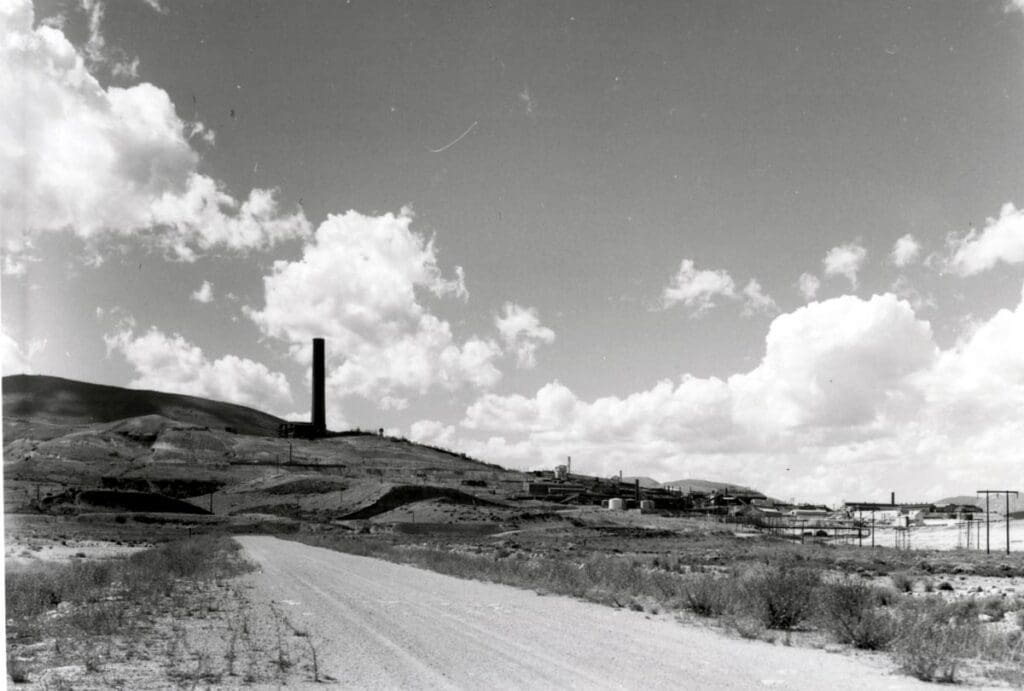
Anaconda Smelter being torn down. Circa 1982. Source: World Museum of Mining
1980 September 29
Anaconda Smelter closed down.
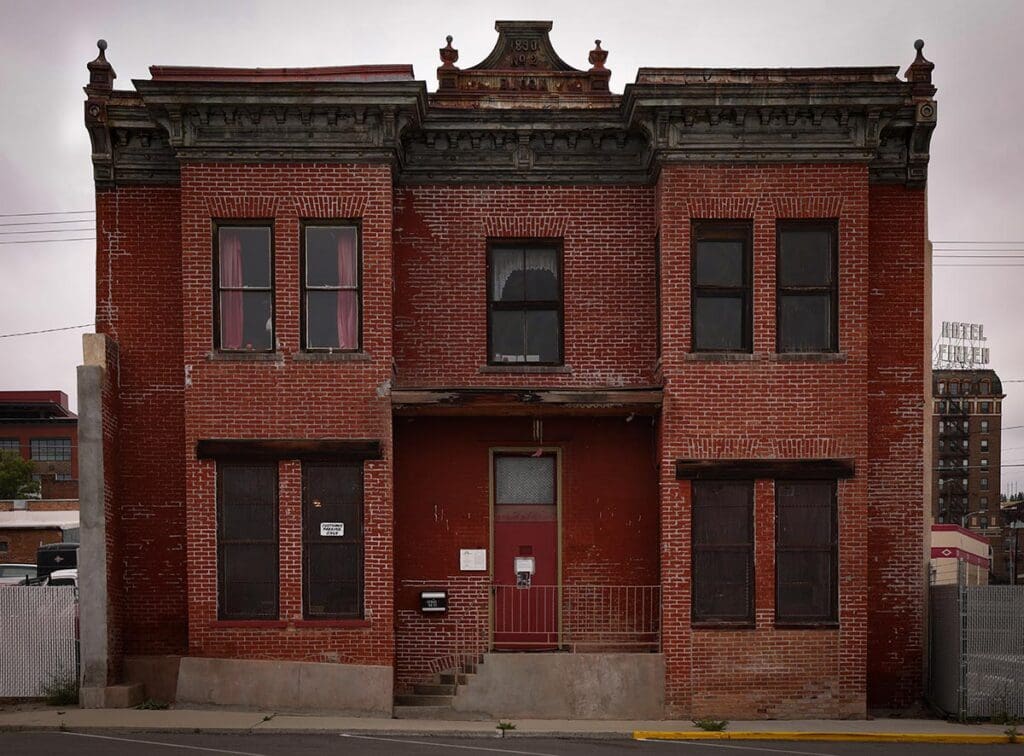
The Dumas Brothel. Source: Tempest Technologies
1982
The Dumas Brothel closed after nearly a century in operation, and it became known as the longest-running brothel in the United States.
1982 April 23
Open-pit mining at the Berkeley Pit shut down.
1983
Silver Bow Creek was added as a Superfund Site and remained one ever since.
1983 June 30
Anaconda suspended all operations in Butte.
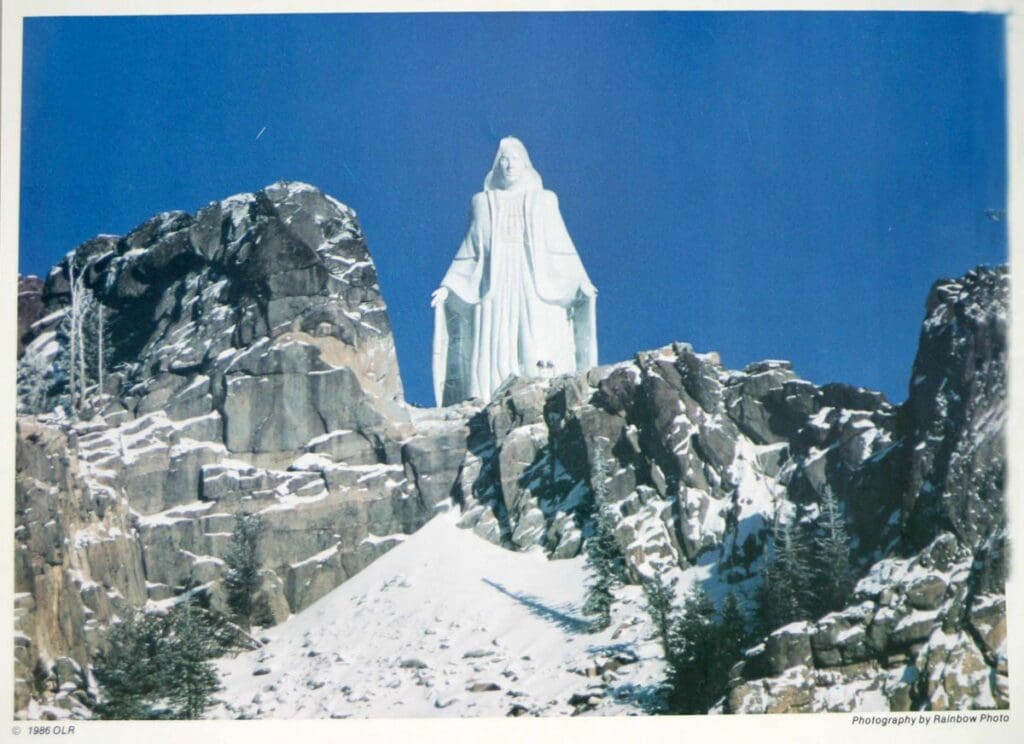
Our Lady of the Rockies. Circa 1990. Source: World Museum of Mining
1985 December 17
Construction on Our Lady of the Rockies finished, and she was airlifted up onto the mountain.
1986 July 16
Open pit mining resumed with 188 non-union workers.
1987
The Butte area was added to the Silver Bow Creek Superfund Site, and remained one since. The entire Superfund Site would include Silver Bow Creek, the Berkeley Pit, underground mines of Butte’s historic mining district (Butte Hill), urban areas of Butte and Walkerville, rural areas outside of Butte where mining occurred, and the treatment ponds at Warm Springs Ponds.
1990
Butte’s population was 33,941, according to the 1990 Census.
1991
Mai Wah Society opened. The society is dedicated to documenting, preserving, and interpreting the history and culture of Asian people in the Rocky Mountain West.
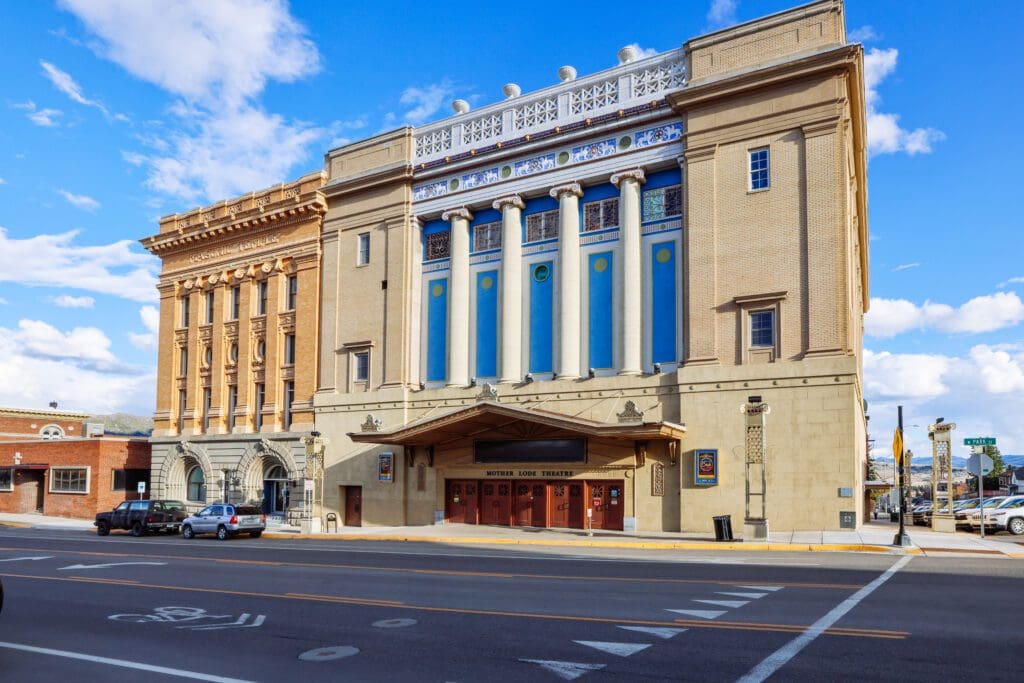
Mother Lode Theater. Photo Credit: Rick Graetz
1996
Fox Theatre was renovated and reopened under its new name, Mother Lode Theatre.
2000s
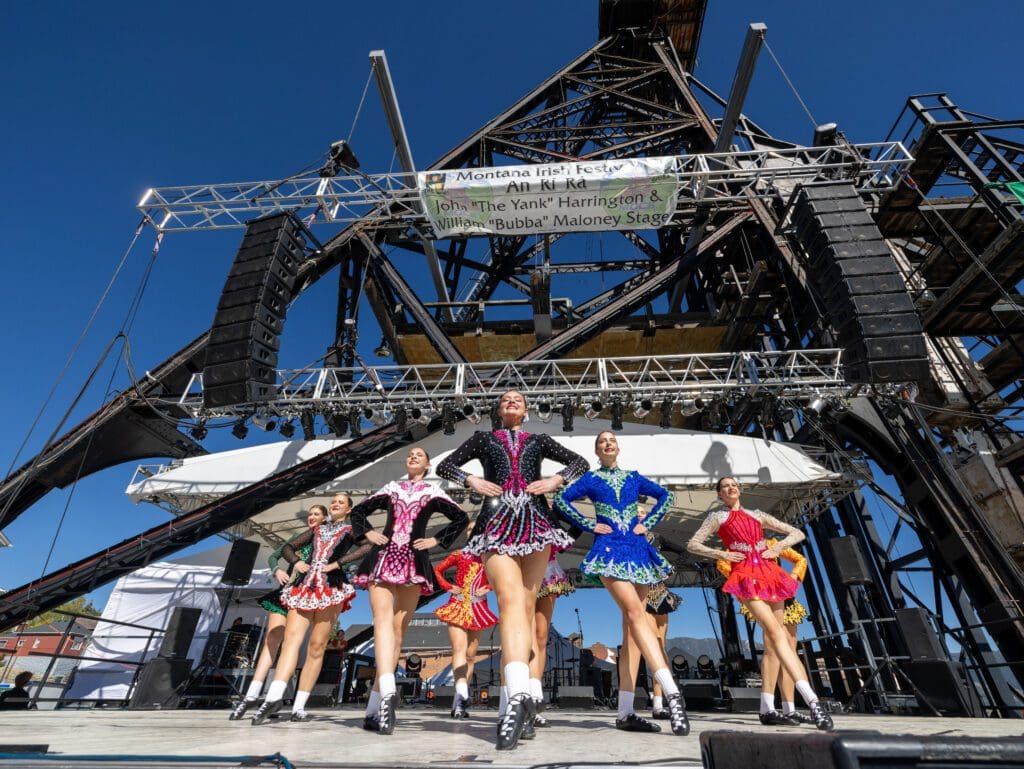
An Ri Ra dancers on stage at a Butte Montana Festival. Source: Tempest Technologies
2004
Butte hosted its first An Ri Ra Festival, which celebrated Irish culture.
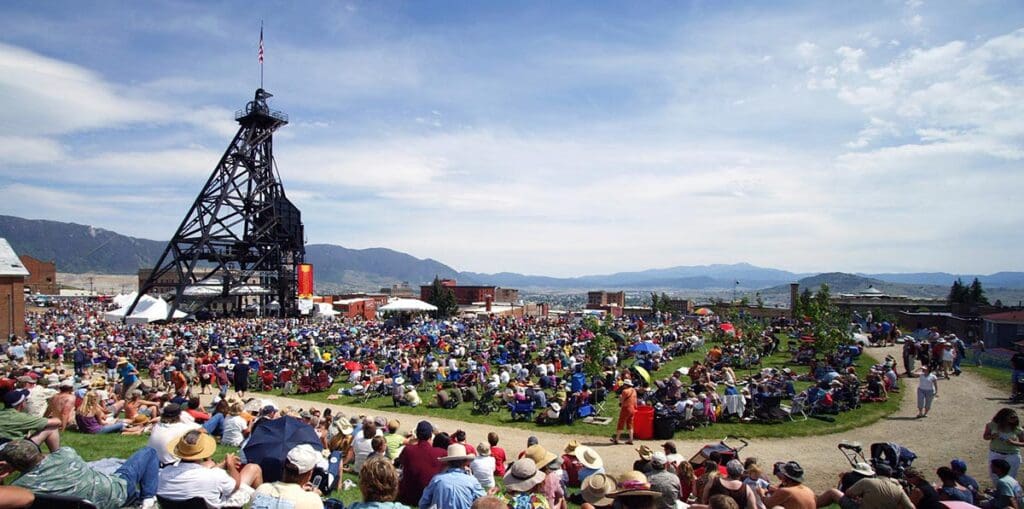
Large crowds at the Montana Folk Festival. Source: Tempest Technologies.
2008
Butte hosted the National Folk Festival for the first time, as part of a three-year partnership. 2008 marked the first time the event was hosted west of the Mississippi River in 44 years.
2011 July 8-10
Butte hosted the first Montana Folk Festival.
2012
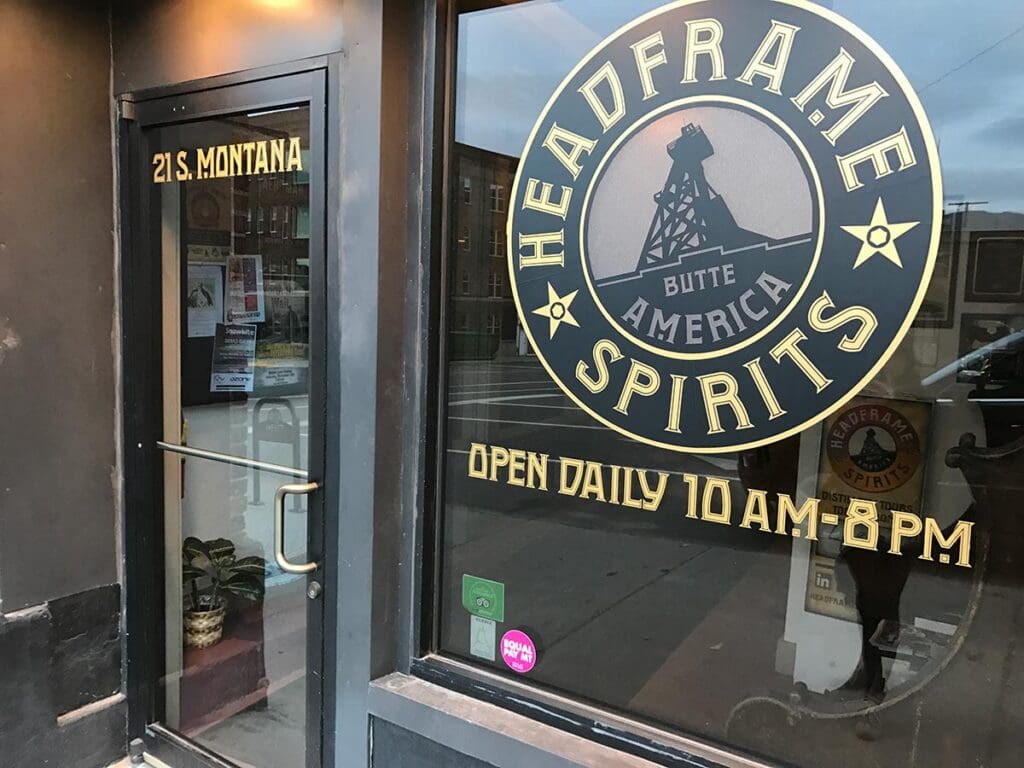
Headframe Spirits opened the doors to its tasting room.
2026 February 9
The first Montana Mining Day was observed, intended to celebrate the hard work of miners and acknowledge the industry’s contributions to Montana.
Find an inaccuracy or want to add to this page? Give us a call.